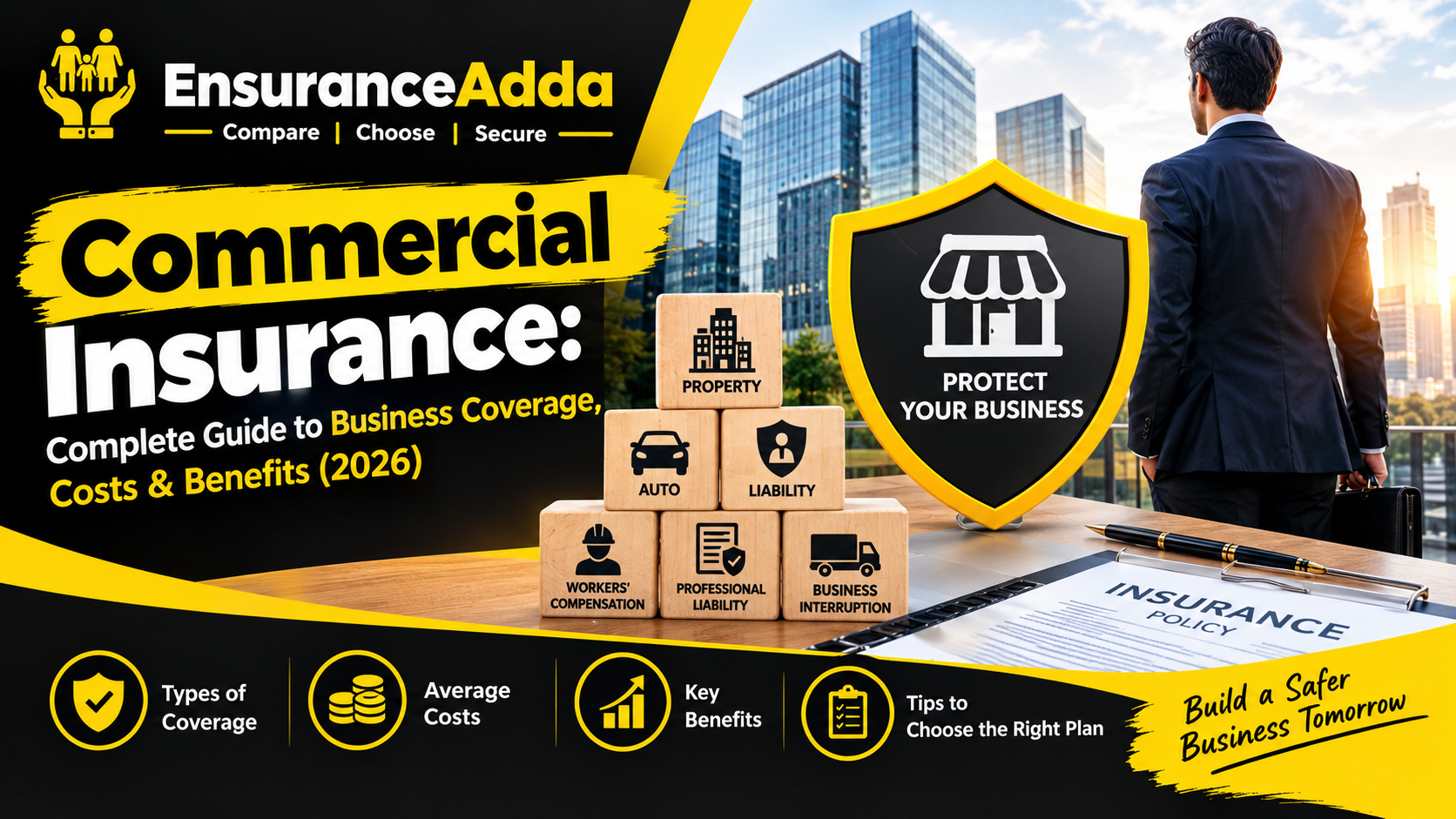

Running a small business in India means juggling cash flow, staff, suppliers and compliance. One fire, theft, lawsuit or cyberattack can undo years of hard work. Small business insurance is the safety net that helps you recover without draining your savings or shutting down.
This guide explains what small business insurance is, the main types of cover available, what it costs, and how to choose the right policy.
What Is Small Business Insurance?
Small business insurance is a set of policies that protect a micro, small or medium enterprise (MSME) against financial loss from events such as fire, burglary, natural disasters, accidents, legal claims and equipment failure. You pay a premium, and the insurer compensates you for covered losses up to the sum insured.
India has over 6 crore MSMEs, yet only a small share carries adequate insurance. Many owners assume cover is expensive or only meant for large companies. In reality, premiums for small businesses are often modest compared with the loss they prevent.
Why Small Businesses Need Insurance
- Protection from sudden losses: Fire, floods, riots or theft can destroy stock and equipment overnight.
- Business continuity: Some policies cover lost income while you rebuild.
- Legal and compliance cover: Liability claims from customers or third parties can be costly.
- Loan and lender requirements: Banks often ask for insurance on assets that are hypothecated against a loan.
- Customer and partner trust: Being insured signals that you are a serious, stable business.
- Employee welfare: Health and accident cover helps attract and retain staff.
Types of Small Business Insurance in India
1. Fire and Special Perils Insurance
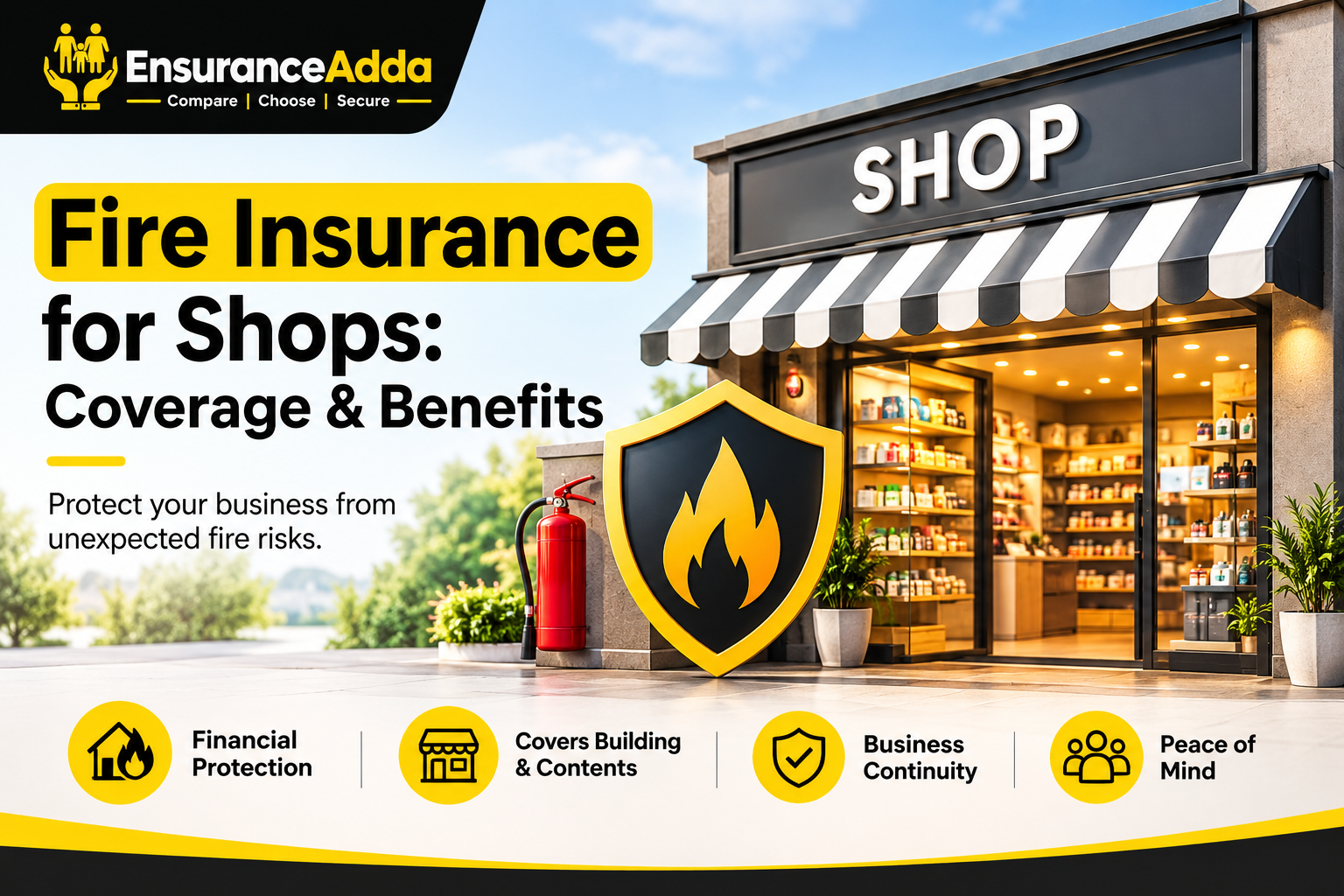
This covers your building, stock, machinery and fixtures against fire, lightning, explosion, riots, strikes, storm, flood and similar perils. It is among the most important covers for shops, godowns and factories. You can read more in our guide on fire insurance for shops.
2. Burglary and Theft Insurance
It protects stock and assets kept on your premises against burglary, housebreaking and theft. It is especially useful for retail stores, jewellers, electronics dealers and warehouses.
3. Public Liability Insurance
If a customer slips in your shop, or your product or activity causes injury or property damage to a third party, this policy covers legal costs and compensation. Restaurants, retail outlets and service businesses benefit the most.
4. Employees’ Compensation Insurance
Under the Employees’ Compensation Act, employers are responsible for compensating workers who suffer injury, disability or death due to work-related accidents. This policy covers that liability, which is important for factories, construction and any business with manual workers.
5. Group Health Insurance
Group health cover protects your employees and often their families against hospitalisation costs. It is a strong retention tool and usually cheaper per head than individual policies. Understanding concepts such as cashless claims and room rent limits will help you choose a plan wisely.
6. Marine Cargo Insurance
If you transport goods by road, rail, air or sea, whether domestic or international, this policy covers loss or damage during transit. Traders, manufacturers and e-commerce sellers should consider it.
7. Machinery Breakdown and Electronic Equipment Insurance
These covers pay for repair or replacement when machinery, computers or other equipment break down due to sudden and unforeseen causes such as short circuits or operator error.
8. Cyber Insurance
As more small businesses use digital payments, online stores and cloud software, cyber risks grow. Cyber insurance can cover data breach costs, ransomware, business interruption and legal expenses.
9. Fidelity Guarantee Insurance
This covers losses caused by dishonesty, fraud or embezzlement by employees, which matters for businesses that handle cash or inventory through staff.
10. Business Interruption (Loss of Profit) Insurance
Usually bought as an add-on to a fire policy, it compensates for lost gross profit and fixed expenses while operations are halted after an insured event.
11. Package and Bundled Policies
Insurers offer bundled products for small enterprises that combine multiple covers into one policy. Examples include the Bharat Sookshma Udyam Suraksha and Bharat Laghu Udyam Suraksha policies, designed for micro and small enterprises respectively. They typically combine fire and allied perils with other covers, which can be simpler and cheaper than buying each separately. Check the current offerings with your insurer, as products and terms change.
How Much Does Small Business Insurance Cost?
There is no fixed price. Premiums depend on several factors:
- Type of business: A textile godown carries a higher fire risk than an office.
- Sum insured: Higher asset value means a higher premium.
- Location: Flood-prone or high-crime areas can attract higher rates.
- Construction and safety measures: Fire extinguishers, alarms, CCTV and good wiring can reduce premiums.
- Claims history: A clean record often helps.
- Add-ons and deductibles: Extra covers raise the premium, while a higher deductible can lower it.
Premiums also attract GST, so confirm the final amount before you buy. Always ask for quotes from at least three insurers.
How to Choose the Right Policy
- List your risks. Walk through your premises, stock, equipment, staff and customers, and note what could go wrong.
- Value your assets correctly. Under-insuring can lead to reduced claim payouts, while over-insuring wastes money.
- Prioritise essentials first. Start with fire, theft and liability, then add other covers as your business grows.
- Read inclusions and exclusions. Know what is not covered, such as wear and tear, intentional damage or war.
- Check the claim settlement record. Look at the insurer’s claim settlement ratio and customer reviews.
- Compare policies. Look beyond the premium at the deductible, sub-limits and add-ons.
- Consider a broker or advisor. An experienced advisor can help with complex commercial policies.
Documents Usually Required
- Business registration proof, such as Udyam registration, GST registration or a shop establishment licence
- PAN and Aadhaar of the owner
- Address proof of the business premises
- Inventory or asset list with valuations
- Previous policy details and claims history, if any
- Details of employees for health or compensation covers
How to Buy Small Business Insurance
You can buy through the insurer’s website, an insurance agent, a broker or an online aggregator. Fill in details about your business, compare quotes, choose your covers and complete the payment. For larger or specialised risks, an insurer may inspect the premises before issuing the policy.
Tips for a Smooth Claim
- Inform the insurer immediately after any loss and follow the timelines in your policy.
- File a police report (FIR) in case of theft, burglary or riots.
- Document everything with photos, videos and invoices.
- Prevent further damage and protect what remains, as required by the policy.
- Keep records updated, including stock registers and purchase bills, so you can prove the loss.
- Cooperate with the surveyor appointed by the insurer.
Common Mistakes to Avoid
- Buying only on the basis of the cheapest premium
- Under-insuring stock and equipment
- Ignoring policy exclusions
- Forgetting to renew on time
- Not updating the sum insured as the business grows
- Hiding or misreporting information, which can lead to claim rejection
Final Thoughts
Insurance is not an expense to avoid but a way to protect everything you have built. Start by identifying your biggest risks, cover the essentials, and review your policies every year as your business grows. A well-chosen policy lets you focus on what matters most: running and growing your business with confidence.
FAQs
Is small business insurance mandatory in India?
Mostly no, but some covers are required in certain cases, such as employees’ compensation for eligible employers, or when a lender mandates insurance on financed assets.
Can a home-based business get insurance?
Yes. Home-based businesses should confirm that their home policy covers business stock and equipment, or buy a separate commercial policy.
What is the best insurance for a small shop?
A shopkeeper’s package or a combination of fire, burglary and public liability cover is usually the most suitable starting point.
Does insurance cover losses from natural disasters?
Fire and special perils policies cover many natural events such as floods and storms, but exclusions and conditions apply, so read the policy carefully.