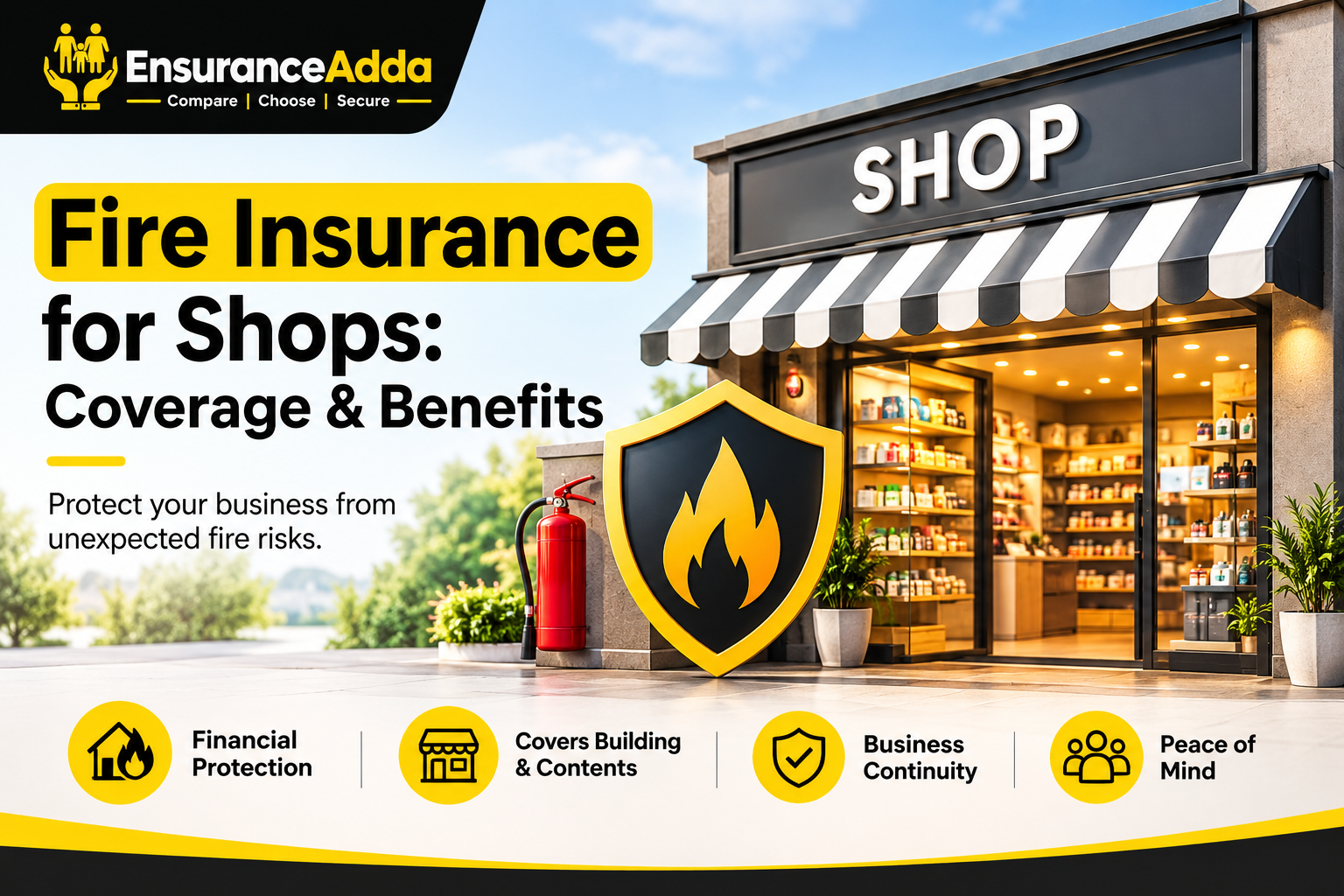
Running a shop in India involves investing in inventory, furniture, electrical equipment, display units, and other essential assets. Whether you own a grocery store, clothing shop, electronics showroom, pharmacy, or small retail outlet, a fire can cause serious financial damage in a short time.
Electrical faults, short circuits, accidental fires, and other unexpected incidents can damage shop premises and destroy valuable stock. Recovering from such losses may be difficult, particularly for small business owners with limited financial reserves.
This is why Fire Insurance for Shops is an important consideration for protecting your business assets against covered fire-related losses. The right policy can help you manage eligible repair, replacement, and property damage expenses, subject to the policy terms and conditions.
In this guide, you will learn what shop fire insurance is, what it covers, its benefits, the factors affecting premiums, the documents required, and how to choose suitable coverage for your business.
What Is Fire Insurance for Shops?
Fire insurance for shops is a type of property insurance that provides financial protection against covered losses caused by fire and any additional insured perils specified in the policy.
Depending on the policy, the insured property may include shop premises, furniture, fixtures, electrical equipment, machinery, and stock.
For example, imagine you operate a clothing store and a fire damages your inventory and display counters. If the affected items are insured and the incident falls within the policy coverage, the insurer may compensate you for the admissible loss after applying the relevant terms, limits, and deductions.
Fire insurance can be relevant to small retail businesses, independent shop owners, wholesalers, and commercial establishments that store valuable goods.
However, not every fire-related incident or type of damage is automatically covered. Always review the policy wording, exclusions, deductibles, and sum insured before purchasing.
Why Is Fire Insurance Important for Shop Owners?
A fire can affect more than the physical appearance of a shop. It can destroy merchandise, damage electrical systems, interrupt operations, and create unexpected financial pressure.
Here are some important reasons to consider shop fire insurance.
1. Protection Against Major Financial Losses
Replacing damaged stock, furniture, equipment, and other business assets can require a significant investment. Fire insurance may help cover eligible losses, reducing the amount a business owner needs to pay from personal or business funds.
2. Protection for Valuable Shop Inventory
Retail shops often keep substantial amounts of stock on their premises. A fire could damage clothing, electronics, groceries, furniture, medicines, or other products.
Suitable insurance can protect declared and insured inventory against covered fire damage, subject to policy limits and conditions.
3. Support for Repairs and Replacements
A covered fire may damage electrical installations, counters, fixtures, machinery, or insured building components. Depending on the policy, the claim may help pay for eligible repairs or replacement costs.
4. Greater Financial Stability
Unexpected property losses can affect working capital and make it difficult to pay rent, suppliers, or employees. Insurance can help reduce the financial impact of a covered event.
5. Protection for Growing Businesses
As a shop expands, its inventory and equipment values may increase. Reviewing insurance regularly helps owners ensure that their coverage remains appropriate for their changing business needs.
What Does Fire Insurance for Shops Cover?
The exact coverage depends on the policy selected. Common insured property and potential benefits may include the following.
1. Shop Building and Premises
If you own the shop premises and the building is insured, the policy may cover eligible fire damage to insured structural components.
For rented shops, coverage for the building itself may belong to the landlord’s policy. Tenants should check their lease agreement and consider insuring their own eligible contents, stock, and fixtures.
2. Furniture and Fixtures
Shop furniture and fixtures may include:
- Display counters and shelves
- Tables, chairs, and storage cabinets
- Lighting fixtures and eligible electrical installations
- Office furniture and interior fittings
- Other declared business fixtures
These items must fall within the insured property description and policy conditions.
3. Stock and Inventory
Inventory can represent a large part of a shop’s total investment. Depending on the policy, eligible stock may include raw materials, finished products, merchandise, and goods stored at the insured location.
Shop owners should maintain accurate inventory records and make sure the sum insured reflects the value of the stock they intend to protect.
4. Electronic Equipment
Computers, billing systems, printers, point-of-sale machines, and other electronic equipment may be covered against insured fire damage if included in the policy.
However, electrical or mechanical breakdown without an insured fire event may require separate coverage.
5. Machinery and Business Equipment
Shops and commercial establishments that use machinery or specialised equipment may be able to insure those assets against covered fire damage.
The equipment should be correctly declared, and owners should check whether installation, accessories, and related items are included.
6. Certain Additional Perils
Some fire insurance products cover specified additional perils, such as lightning, explosion, or certain natural disasters. The exact protection varies by policy.
Do not assume that every policy automatically covers floods, earthquakes, storms, riots, or other events. Confirm the insured perils and any applicable conditions with the insurer.
What Is Not Covered by Shop Fire Insurance?
Understanding exclusions is just as important as understanding benefits. Depending on the policy wording, common exclusions or limitations may include:
- Damage caused intentionally by the insured.
- Ordinary wear and tear or gradual deterioration.
- Losses caused by events specifically excluded from the policy.
- Certain electrical or mechanical breakdowns that do not result in a covered insured event.
- Stock or equipment not included in the insured property details.
- Losses exceeding applicable policy limits or subject to an uninsured deductible.
- Business interruption losses when interruption coverage has not been purchased or does not apply.
Some exclusions may have exceptions or optional extensions. Read the policy document carefully rather than relying only on a product advertisement.
Benefits of Fire Insurance for Shops
Shop fire insurance offers several potential benefits when the selected policy matches the business’s needs.
Financial Protection for Business Assets
It can help reduce the financial burden of replacing eligible insured property damaged by a covered fire.
Protection for Small Retailers
Small shop owners may not have enough reserves to replace their entire inventory after a major incident. Suitable insurance can help manage the financial consequences of covered losses.
Flexible Coverage Options
Depending on the insurer and product, shop owners may choose coverage for eligible buildings, stock, furniture, fixtures, and other assets.
Improved Risk Management
Buying insurance encourages business owners to assess their property values, review fire safety arrangements, and maintain better business records.
Support During Recovery
After a covered incident, claim proceeds can help fund eligible repairs or replacements, allowing the business to work towards reopening.
Remember that insurance does not guarantee complete recovery from every incident. The final settlement depends on the actual loss, policy wording, sum insured, exclusions, deductibles, and applicable conditions.
Who Should Buy Fire Insurance for Shops?
Fire insurance may be worth considering for businesses that maintain valuable stock, equipment, or premises.
Examples include:
- Grocery stores: To protect eligible inventory, fixtures, and equipment.
- Clothing shops: To insure declared garments and other covered business property.
- Electronics stores: To protect eligible electronic stock and shop contents against insured fire damage.
- Medical stores: To cover eligible insured stock, fixtures, and equipment.
- Furniture shops: To protect declared furniture inventory and other insured property.
- Mobile phone shops: To insure eligible stock, counters, computers, and fixtures.
- Hardware stores: To protect declared inventory and business assets.
- Wholesale shops: To manage property risks involving larger quantities of goods.
The suitable policy will depend on the nature of the goods, storage conditions, premises, and total value of the assets.
How Much Does Fire Insurance for Shops Cost in India?
There is no fixed premium for every shop. The cost depends on the insured property’s value, the business activity, the location, the selected coverage, and the insurer’s underwriting assessment.
Factors that may affect the premium include:
Value of insured property: Higher declared values may increase the premium because the insurer is covering a larger potential loss.
Type of business: A shop selling certain flammable goods may have a different risk profile from a stationery or clothing store.
Location and construction: The premises’ construction, location, and exposure to particular hazards can affect underwriting.
Safety arrangements: Fire extinguishers, suitable electrical installations, alarms, and other safety measures may be considered by the insurer.
Additional coverage: Optional protection for burglary, machinery breakdown, or business interruption may increase the overall cost.
Deductibles and policy terms: Different limits, deductibles, and coverage conditions can affect the quotation.
To compare policies, request quotations using the same property values and coverage requirements. Do not choose a policy based only on the lowest premium.
How to Choose the Right Fire Insurance Policy for Your Shop
Follow these steps to select suitable coverage.
Step 1: Calculate Your Shop’s Asset Value
Prepare a list of your inventory, furniture, fixtures, equipment, and any building components you own and wish to insure.
Use reliable records and valuations to avoid underinsuring your assets.
Step 2: Identify the Property You Need to Insure
If you rent your shop, clarify which assets belong to you and which building components are the landlord’s responsibility.
Make sure your policy describes the property you actually need to protect.
Step 3: Compare Insurance Policies
Compare the insured perils, exclusions, deductibles, claim limits, and settlement conditions across available products.
Check whether the policy covers only fire or also provides additional protection against specified allied perils.
Step 4: Review Optional Benefits
Depending on your requirements, consider whether you need burglary cover, business interruption insurance, or separate protection for machinery and electronic equipment.
Step 5: Check the Insurer’s Credentials
Verify the insurer’s authorisation through the official Insurance Regulatory and Development Authority of India (IRDAI) website. Review the policy documents before paying the premium.
Step 6: Understand the Claim Process
Check the insurer’s claim notification requirements, document checklist, and procedure for assessment and settlement.
Documents Required for Shop Fire Insurance
The documents required vary by insurer and policy. Commonly requested information may include:
- Identity and address proof of the proposer.
- Shop address and ownership or rental details.
- Business registration documents, where applicable.
- GST registration details, where applicable.
- Details of the building, fixtures, and insured contents.
- Stock statements, purchase invoices, or asset valuation records.
- Details of the business activity and fire safety arrangements.
- Previous insurance and claims information, where applicable.
The insurer may request additional information depending on the shop’s size, nature of business, and risk profile.
How to Make a Fire Insurance Claim for Your Shop
If a fire damages your shop, take the following steps.
- Prioritise safety: Evacuate the premises and contact emergency services when needed. Do not enter an unsafe building.
- Notify the insurer: Report the incident promptly and follow the policy’s claim notification requirements.
- Inform the authorities: Obtain a fire brigade report or other official documentation where applicable.
- Document the damage: Take photographs or videos only when it is safe to do so. Prepare a list of damaged inventory, equipment, and fixtures.
- Preserve relevant records: Keep purchase invoices, stock records, repair estimates, and other supporting documents.
- Cooperate with the surveyor: The insurer may appoint a surveyor or request additional evidence to assess the loss.
- Submit the claim documents: Complete the claim form and provide the requested information.
- Review the settlement: Check the approved amount, deductions, and policy conditions.
Avoid disposing of damaged property before receiving instructions from the insurer or surveyor, unless necessary for safety or to prevent further damage.
Frequently Asked Questions About Fire Insurance for Shops
1. Is fire insurance mandatory for shops in India?
Fire insurance is not universally mandatory for every shop. However, lenders, landlords, lease agreements, or commercial contracts may require particular insurance coverage. Check the requirements applicable to your business.
2. Does shop fire insurance cover stock?
It can cover eligible stock when the inventory is included in the insured property details and the damage results from a covered event. Review the sum insured and exclusions carefully.
3. Can tenants buy fire insurance for a rented shop?
Yes. Tenants can explore coverage for their own eligible stock, furniture, fixtures, equipment, and other insured contents. Building coverage should be coordinated with the landlord’s insurance arrangements.
4. Does fire insurance cover short-circuit damage?
A fire resulting from an electrical short circuit may be covered if it falls within the policy’s terms. Electrical damage without a covered fire event may be excluded or require separate coverage.
5. Does fire insurance cover business losses during closure?
Not necessarily. Compensation for lost income or continuing expenses generally requires applicable business interruption coverage and an insured triggering event.
6. How can I buy fire insurance for my shop online?
Visit an authorised insurer’s official website, select an appropriate commercial property or fire insurance product, provide accurate property details, compare the quotation and policy terms, and complete the purchase process.
7. How often should I review my shop fire insurance?
Review your policy at least when renewing it and whenever you expand your shop, increase stock, purchase equipment, or change your premises.
Conclusion
Fire insurance for shops can be an important part of protecting a retail business against unexpected property damage. A suitable policy may help cover eligible losses involving stock, furniture, equipment, and insured premises when damage results from a covered fire or other specified peril.
Before purchasing, calculate your asset values, understand the policy exclusions, compare coverage options, and confirm the claim process. Review your insurance regularly as your business grows.
By choosing appropriate Fire Insurance for Shops, you can manage certain financial risks more effectively and focus on running your business with greater confidence.