
Whether you’re a student, salaried employee, self-employed professional, senior citizen, or looking for family health insurance, choosing the right Health Insurance plan can save lakhs of rupees during hospitalization and provide peace of mind.
This comprehensive guide explains everything you need to know about Health Insurance in India in 2026—from types of policies and coverage benefits to claim processes, tax deductions, premium calculation, and expert tips for selecting the best plan.
If you’re planning to buy or compare health insurance plans, this guide will help you make an informed decision.
Why Health Insurance is Important in India
Medical inflation in India continues to increase every year. Treatments that cost ₹2 lakh a few years ago may now cost ₹5 lakh or more.
Here’s why Health Insurance is essential:
- Protects your savings during medical emergencies.
- Covers hospitalization expenses.
- Provides cashless treatment at network hospitals.
- Covers surgeries, ICU charges, medicines, and diagnostic tests.
- Offers tax benefits under Section 80D.
- Helps manage critical illness expenses.
Without Health Insurance, one unexpected hospitalization can significantly impact your finances.
Health Insurance at a Glance (2026)
| Feature | Details |
| Focus Keyword | Health Insurance |
| Coverage Starts From | ₹3 Lakh |
| Maximum Coverage | ₹1 Crore+ |
| Cashless Hospitals | 10,000+ Across India |
| Tax Benefit | Section 80D of Income Tax Act |
| Waiting Period | 30 Days to 4 Years (depends on policy) |
| Claim Types | Cashless & Reimbursement |
| Best For | Individuals, Families, Senior Citizens, Children |
What is Health Insurance?
Health Insurance is a contract between you and an insurance company where the insurer pays for covered medical expenses in exchange for a premium.
It generally covers:
- Hospitalization
- Pre-hospitalization expenses
- Post-hospitalization expenses
- Day-care procedures
- Ambulance charges
- ICU expenses
- Surgery costs
- Doctor consultation during hospitalization
Some premium Health Insurance plans also include wellness benefits, mental health treatment, maternity benefits, and preventive health check-ups.
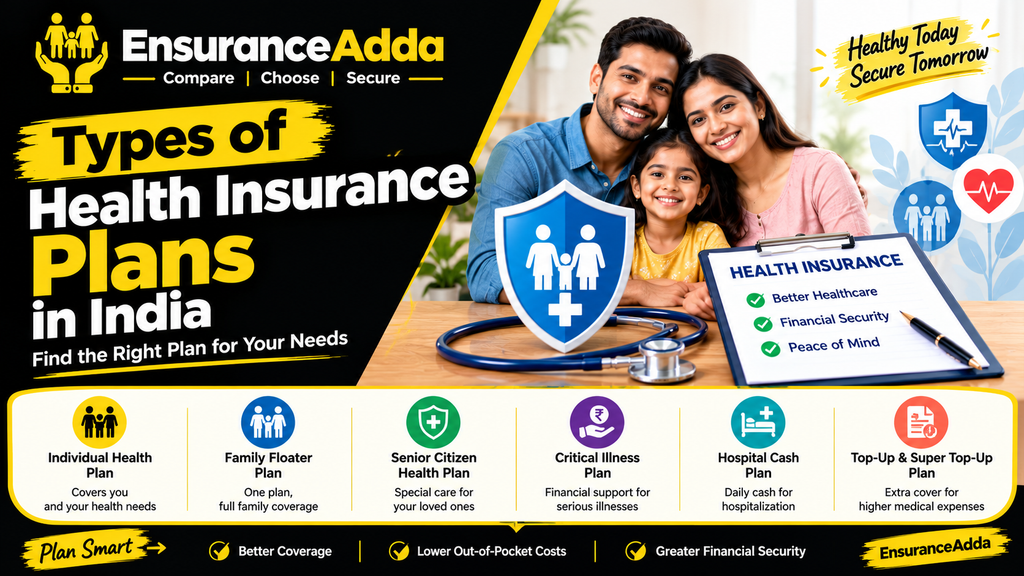
Types of Health Insurance Plans in India
Choosing the right type of Health Insurance depends on your age, family size, and healthcare needs.
1. Individual Health Insurance
Designed for one person only.
Best For:
- Young professionals
- Students
- Working individuals
Benefits
- Individual sum insured.
- Personalized coverage.
- Lower premiums for younger buyers.
2. Family Floater Health Insurance
One sum insured covers the entire family.
Covers:
- Husband
- Wife
- Children
- Sometimes parents
Benefits
- Affordable premiums.
- Shared coverage.
- Easy policy management.
3. Senior Citizen Health Insurance
Special Health Insurance plans for people above 60 years.
Includes
- Age-related illnesses.
- Higher hospitalization coverage.
- Regular health check-ups.
4. Critical Illness Health Insurance
Provides a lump-sum payout for serious diseases.
Covers illnesses like:
- Cancer
- Heart attack
- Kidney failure
- Stroke
- Organ transplant
5. Top-Up & Super Top-Up Health Insurance
Additional coverage beyond your existing Health Insurance policy.
Best For
- People with employer insurance.
- Individuals seeking higher coverage at a lower premium.
What Does Health Insurance Cover?
A good Health Insurance policy covers much more than hospitalization.
Standard Coverage
| Coverage | Included |
| Hospitalization | ✅ Yes |
| ICU Charges | ✅ Yes |
| Room Rent | ✅ Depends on Policy |
| Day-Care Procedures | ✅ Yes |
| Ambulance Charges | ✅ Yes |
| Pre-Hospitalization | ✅ 30–90 Days |
| Post-Hospitalization | ✅ 60–180 Days |
| Diagnostic Tests | ✅ Covered |
| AYUSH Treatment | ✅ Many Policies |
| Mental Health | ✅ Modern Policies |
What is Not Covered Under Health Insurance?
Every Health Insurance policy has exclusions.
Common Exclusions
- Cosmetic surgery.
- Dental treatment (unless accident-related).
- Infertility treatment.
- Self-inflicted injuries.
- Substance abuse treatment.
- Experimental treatments.
- Non-prescribed medicines.
Always read the policy document before purchasing.
Benefits of Buying Health Insurance Early
Buying Health Insurance at a younger age has significant advantages.
Major Benefits
Lower Premiums
Young individuals pay much lower premiums.
Waiting Period Completes Early
Pre-existing disease waiting periods begin immediately.
Better Coverage
No age-related restrictions.
Higher No Claim Bonus (NCB)
Get increased coverage without increasing premium.
How Health Insurance Premium is Calculated
Insurance companies calculate premiums using several factors.
Premium Factors
| Factor | Impact |
| Age | Higher age = Higher premium. |
| Medical History | Pre-existing diseases increase premium. |
| Coverage Amount | Higher sum insured increases premium. |
| City | Metro cities often have higher premiums. |
| Smoking | May increase premium. |
| BMI | Higher health risks affect pricing. |
How Much Health Insurance Coverage Do You Need?
Choosing the right coverage amount is crucial.
Recommended Coverage
| Category | Suggested Coverage |
| Individual (Age 25–35) | ₹10–15 Lakh |
| Married Couple | ₹15–20 Lakh |
| Family with Children | ₹20–30 Lakh |
| Senior Citizens | ₹10–25 Lakh |
| Metro City Residents | ₹25 Lakh+ |
Cashless vs Reimbursement Health Insurance Claims
Cashless Claim
Hospital directly settles bills with the insurer.
Advantages
- No upfront payment (except non-covered expenses).
- Faster treatment.
- Convenient claim process.
Reimbursement Claim
You pay the hospital bill first.
Later, submit documents for reimbursement.
Required Documents
- Hospital bills.
- Discharge summary.
- Prescriptions.
- Investigation reports.
- Claim form.
Comparison Table
| Feature | Cashless | Reimbursement |
| Payment at Hospital | Minimal | Full Payment |
| Network Hospital Required | Yes | No |
| Documentation | Less | More |
| Claim Settlement | Faster | Takes Processing Time |
How to Choose the Best Health Insurance Plan
Before buying Health Insurance, compare these important features.
Checklist
- Coverage amount.
- Network hospitals.
- Claim settlement ratio.
- Waiting period.
- Room rent limit.
- Co-payment clause.
- Pre-existing disease coverage.
- No Claim Bonus.
- Restoration benefit.
- Lifetime renewability.
Compare at least 3 Health Insurance plans before purchasing.
Health Insurance Waiting Period Explained
Waiting period means the duration before certain benefits become available.
Types of Waiting Period
| Waiting Period | Duration |
| Initial Waiting Period | 30 Days |
| Specific Disease Waiting | 1–2 Years |
| Pre-existing Diseases | 2–4 Years |
| Maternity Waiting | 9 Months–4 Years |
Health Insurance Tax Benefits Under Section 80D
Health Insurance also helps save income tax.
Deduction Limits
| Category | Maximum Deduction |
| Self + Family | ₹25,000 |
| Parents Below 60 | ₹25,000 |
| Parents Above 60 | ₹50,000 |
| Senior Citizen Self | ₹50,000 |
Total Possible Deduction
Up to ₹75,000–₹1,00,000 depending on eligibility.
Health Insurance for Senior Citizens
Senior citizens require specialized Health Insurance plans.
Features
- Coverage for age-related illnesses.
- Annual health check-ups.
- Day-care procedures.
- Domiciliary hospitalization.
- AYUSH treatment.
Tips
- Buy before turning 60 if possible.
- Compare co-payment clauses carefully.
- Choose higher hospitalization coverage.
Health Insurance for Women
Many insurers now provide women-specific Health Insurance.
Coverage Includes
- Maternity.
- Newborn baby cover.
- Breast cancer coverage.
- Cervical cancer screening.
- Wellness programs.
Health Insurance for Children
Child Health Insurance provides financial protection from an early age.
Covers
- Hospitalization.
- Vaccinations (selected plans).
- Pediatric treatment.
- Congenital diseases (after waiting period).
Common Health Insurance Terms You Should Know
| Term | Meaning |
| Sum Insured | Maximum amount insurer pays. |
| Premium | Annual payment for policy. |
| Co-payment | Percentage you pay during claims. |
| Deductible | Initial amount you pay before insurer pays. |
| Waiting Period | Time before benefits start. |
| Network Hospital | Hospital partnered with insurer. |
| Cashless Claim | Direct payment by insurer. |
Documents Required to Buy Health Insurance
Keep these documents ready.
Required Documents
- Aadhaar Card.
- PAN Card.
- Passport-size photograph.
- Address proof.
- Income proof (sometimes).
- Medical reports (if required).
- Age proof.
How to Buy Health Insurance Online
Buying Health Insurance online is quick and convenient.
Step-by-Step Process
- Compare Health Insurance plans.
- Select coverage amount.
- Fill personal details.
- Declare medical history honestly.
- Upload documents.
- Complete payment.
- Receive policy instantly via email.
How to File a Health Insurance Claim
Cashless Claim Process
- Visit a network hospital.
- Show Health Insurance card.
- Fill pre-authorization form.
- Hospital sends request.
- Insurer approves treatment.
- Bill settled directly.
Reimbursement Claim Process
- Receive treatment.
- Pay hospital bill.
- Collect original documents.
- Submit claim within policy timeline.
- Claim verified.
- Amount reimbursed.
Mistakes to Avoid While Buying Health Insurance
Avoid these common mistakes:
- Buying low coverage.
- Ignoring waiting periods.
- Not disclosing medical history.
- Choosing plans with room rent limits.
- Ignoring exclusions.
- Buying only employer Health Insurance.
- Missing policy renewal dates.
Pro Tips for Choosing the Best Health Insurance
Expert Tips
Buy Health Insurance Early
Lower premium and better benefits.
Choose Restoration Benefit
Coverage restores after one claim.
Prefer Lifetime Renewability
Ensures uninterrupted protection.
Check Hospital Network
Ensure nearby hospitals offer cashless treatment.
Read Claim Settlement Record
Choose insurers with a strong claim settlement performance.

Common Health Insurance Myths (Busted)
| Myth | Reality |
| Young people don’t need Health Insurance. | Medical emergencies can happen at any age. |
| Employer insurance is enough. | Job changes may leave you uninsured. |
| All diseases are covered immediately. | Waiting periods apply. |
| Cheapest plan is best. | Coverage quality matters more than price. |
| Claims are always rejected. | Valid claims with correct documents are generally processed. |
Health Insurance Trends in India (2026)
The Health Insurance industry is evolving rapidly.
Latest Trends
- Digital policy issuance.
- AI-powered claim processing.
- Wellness rewards.
- Telemedicine coverage.
- Mental health coverage.
- OPD coverage in premium plans.
- Cashless hospitalization expansion.
These innovations make Health Insurance more accessible and customer-friendly.
Who Should Buy Health Insurance?
Everyone can benefit from Health Insurance.
Recommended For
- Students.
- Working professionals.
- Married couples.
- Parents.
- Senior citizens.
- Self-employed individuals.
- Freelancers.
- Small business owners.
Health Insurance protects both your health and financial stability.
Conclusion: Why Health Insurance is a Smart Financial Decision
Health Insurance is one of the most valuable financial safety nets in today’s world. Rising healthcare expenses make it essential for every Indian household to have adequate medical coverage.
The right Health Insurance plan not only covers hospitalization costs but also provides preventive healthcare benefits, tax savings, wellness rewards, and long-term financial protection. Compare plans carefully, understand waiting periods and exclusions, and choose sufficient coverage based on your family’s healthcare needs.
Call to Action (CTA)
Don’t wait for a medical emergency to realize the importance of Health Insurance. Compare plans, evaluate coverage, and choose a policy that offers comprehensive protection for you and your loved ones in 2026.
Frequently Asked Questions (FAQs)
1. What is Health Insurance?
Health Insurance is a policy that covers medical expenses such as hospitalization, surgeries, medicines, ICU charges, and other healthcare costs in exchange for a premium.
2. Why is Health Insurance important in India?
Health Insurance protects you from rising medical expenses, offers cashless hospitalization, and helps safeguard your savings during emergencies.
3. How much Health Insurance coverage should I buy?
Experts generally recommend at least ₹10–15 lakh for individuals and ₹20–30 lakh for families, especially in metro cities.
4. What is the waiting period in Health Insurance?
A waiting period is the time before certain benefits become available. It can range from 30 days to 4 years depending on the policy and condition.
5. Does Health Insurance cover pre-existing diseases?
Yes, most Health Insurance plans cover pre-existing diseases after completing the specified waiting period.
6. What is a cashless Health Insurance claim?
A cashless claim allows treatment at a network hospital where the insurer settles eligible bills directly with the hospital.
7. Can I buy Health Insurance online?
Yes. You can compare plans, upload documents, pay premiums online, and receive your policy digitally.
8. What tax benefits are available on Health Insurance premiums?
Health Insurance premiums qualify for deductions under Section 80D of the Income Tax Act, subject to applicable limits.
9. Is employer Health Insurance enough?
Employer Health Insurance is useful but may not provide sufficient coverage or continue after changing jobs. Having a personal Health Insurance policy is recommended.
10. What documents are required for a Health Insurance claim?
Typically, you’ll need the claim form, hospital bills, discharge summary, prescriptions, diagnostic reports, ID proof, and other supporting medical documents.