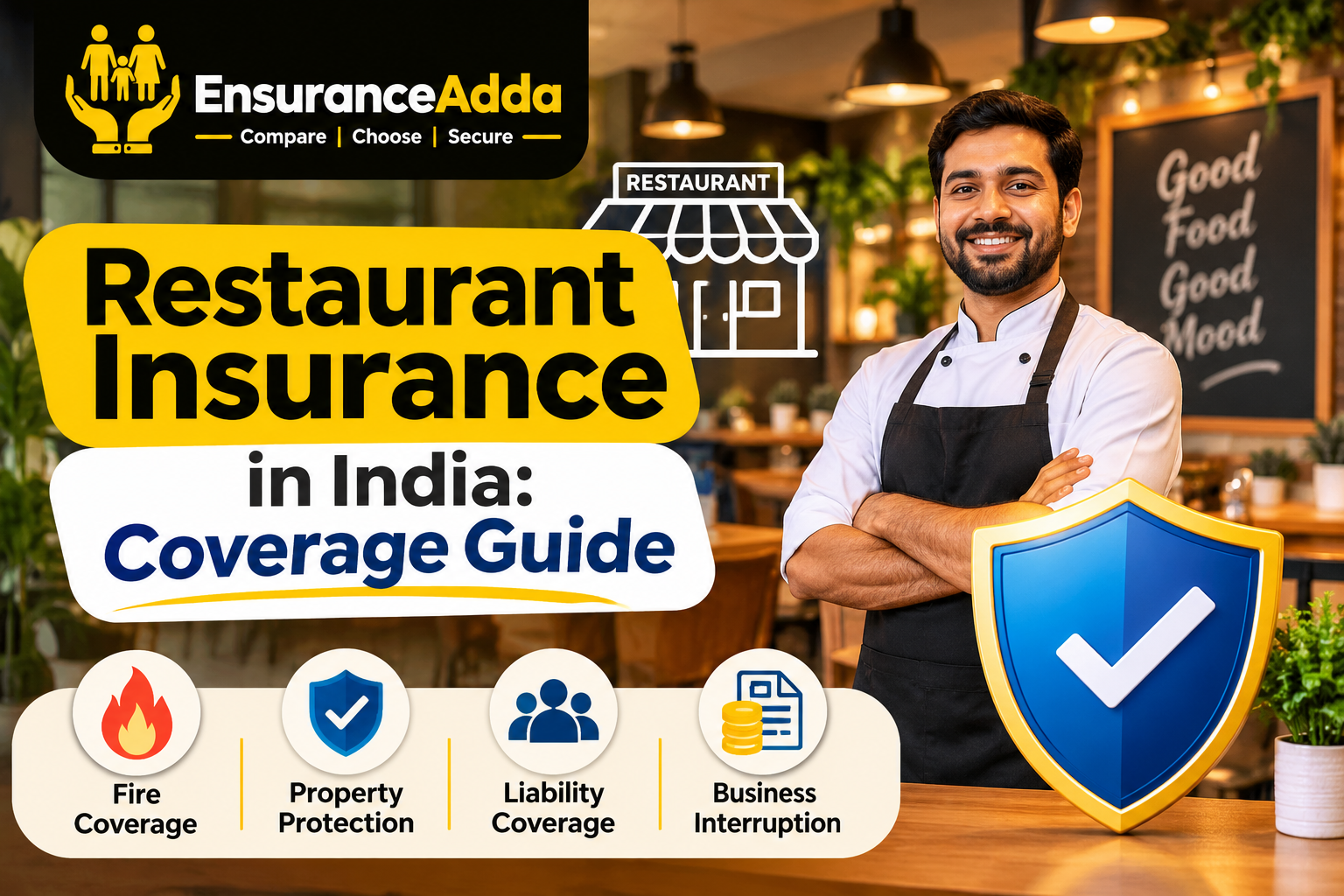
Running a restaurant in India means managing gas cylinders, deep fryers, refrigeration, staff, delivery riders and hundreds of customers every week. One kitchen fire, one slip-and-fall or one long power failure can wipe out months of profit. That is why restaurant insurance in India has moved from “nice to have” to a core part of running a food business.
This coverage guide explains what restaurant insurance includes, which policies matter most, what affects the cost and how to choose the right cover for your restaurant, cafe, cloud kitchen or dhaba.
What Is Restaurant Insurance in India?
Restaurant insurance is not a single policy. It is a package of commercial insurance covers that protect your property, stock, equipment, income and legal liability. Indian insurers usually offer it in one of two ways:
- Package policy: Several covers bundled into one plan, often at a lower combined premium.
- Standalone policies: You buy each cover separately (fire, burglary, liability and so on) and customise the mix.
Either way, the goal is the same: keep your business running after an unexpected loss.
Why Restaurants Need Insurance
Restaurants face higher day-to-day risk than most small businesses:
- Fire hazards: LPG, cooking oil, exhaust ducts and electrical load make kitchens a common fire risk.
- Perishable stock: A refrigeration failure can spoil a large amount of inventory overnight.
- Customer-facing risk: Slips, burns and food-related complaints can lead to legal claims.
- Heavy equipment: Ovens, chillers, POS systems and ACs are expensive to repair or replace.
- Natural events: Floods, storms and other disasters can shut a restaurant for weeks.
Insurance also helps with practical matters such as landlord requirements, bank loans and mall or franchise agreements, which often ask for proof of cover.
Key Types of Restaurant Insurance Coverage
1. Fire and Special Perils Insurance
This is the foundation of any restaurant policy. It covers damage to the building (if you own it), interiors, furniture, fixtures and stock caused by fire, lightning, explosion, riots, strikes, storms, floods and similar listed perils. Most small restaurants start here, and the policy is usually available in a standard format across insurers.
Make sure the sum insured reflects the real replacement value of your interiors and equipment, not just the purchase price from years ago.
2. Business Interruption (Loss of Profit) Cover
If a covered event, such as a fire, forces you to shut down, this cover compensates for lost gross profit and certain fixed expenses like salaries and rent during the closure period. It is usually an add-on to the fire policy and often overlooked, even though it is what keeps you afloat while repairs are done.
3. Public Liability Insurance
If a customer slips on a wet floor or suffers injury on your premises, public liability covers legal costs and compensation up to the policy limit. For restaurants with high footfall, bars or outdoor seating, this is one of the most valuable covers.
4. Product Liability and Food Contamination Cover
This protects you if food or drink you serve causes illness or injury and a third party makes a claim. Since food safety standards are enforced under FSSAI rules, having liability protection adds a financial safety net on top of good hygiene practices.
5. Burglary and Theft Insurance
Covers loss of stock, equipment and fixtures due to burglary, housebreaking or theft. It is especially useful for restaurants in unattended or late-closing premises.
6. Money Insurance
Protects cash held in the premises, in the cash counter or in transit to the bank. Even with high UPI adoption, many restaurants still handle meaningful cash volumes.
7. Equipment Breakdown / Electronic Equipment Cover
Covers sudden breakdown of machinery such as ovens, mixers, refrigerators, ACs, POS terminals and CCTV systems. This is not the same as fire cover, so it usually has to be added separately.
8. Food Spoilage (Deterioration of Stock) Cover
If a power outage or compressor failure spoils refrigerated or frozen stock, this add-on can compensate for the loss, subject to policy terms. For restaurants with cold storage, it is a smart inclusion.
9. Employee-Related Covers
- Workmen’s compensation / Employee compensation: Covers statutory liability if a staff member is injured at work.
- Group health or group personal accident: Protects chefs, waiters and kitchen staff and helps with retention.
- Fidelity guarantee: Covers losses due to employee dishonesty, such as cash or stock misappropriation.
10. Signage and Glass Cover
Outdoor boards, neon signs and large glass fronts are costly to replace and can be covered under a plate glass or signage add-on.
What Restaurant Insurance Usually Does Not Cover
Every policy has exclusions, so read the wording carefully. Common ones include:
- Wear and tear, gradual deterioration and poor maintenance
- Losses caused by deliberate acts of the owner
- War, nuclear risks and similar excluded perils
- Under-insurance penalties if the sum insured is too low
- Losses not reported within the required time
Knowing the exclusions upfront prevents unpleasant surprises at claim time.
Factors That Affect Restaurant Insurance Cost in India
There is no fixed price, because premiums depend on your risk profile. The main factors are:
- Sum insured: Higher asset value means a higher premium.
- Location and construction: Premises in older buildings, narrow lanes or flood-prone areas may cost more.
- Type of kitchen: Open-flame, tandoor and deep-frying operations carry higher fire risk.
- Safety measures: Fire extinguishers, sprinklers, gas leak detectors and proper wiring can help.
- Add-ons chosen: Each extra cover adds to the premium.
- Claims history: A clean record often helps with renewals.
- Deductibles: A higher voluntary deductible can reduce the premium.
Instead of guessing, request quotes from multiple insurers with the same sum insured and add-ons so you can compare like with like.
How to Choose the Right Restaurant Insurance Policy
Step 1: Assess your risks. List your assets, stock levels, staff strength and peak-hour footfall.
Step 2: Calculate the right sum insured. Use replacement cost, not depreciated value, for interiors and equipment.
Step 3: Prioritise core covers. Start with fire, public liability and business interruption, then add burglary, equipment and spoilage as needed.
Step 4: Check claim settlement reputation. Look at the insurer’s claim process, network and customer reviews.
Step 5: Review add-ons and exclusions. A cheaper policy with limited cover can cost you more later.
Step 6: Speak to an insurance advisor. A commercial insurance specialist can tailor the policy to your restaurant format, whether it is a fine-dining space, QSR outlet, cafe or cloud kitchen.
How to File a Restaurant Insurance Claim
- Inform the insurer immediately and report to the police or fire department where relevant.
- Secure the premises and prevent further damage, but do not dispose of damaged items before inspection.
- Document the loss with photos, videos, purchase invoices and stock records.
- Submit the claim form with required documents.
- Cooperate with the surveyor appointed by the insurer.
- Follow up until the claim is assessed and settled.
Maintaining updated stock registers and asset lists makes this process far smoother.
Tips to Lower Your Risk (and Premium)
- Service gas lines, chimneys and electrical systems regularly.
- Train staff in fire safety and first aid.
- Keep fire extinguishers accessible and in date.
- Install CCTV and a good lock system.
- Maintain cleaning logs and cold-chain records.
- Review your cover every year as your menu, assets and revenue grow.
Frequently Asked Questions
Is restaurant insurance mandatory in India?
There is no blanket legal requirement for all restaurants, except statutory covers like employee compensation in applicable cases. However, landlords, lenders and mall operators often require it.
Does restaurant insurance cover food poisoning claims?
Product liability or food contamination cover can respond to third-party claims, subject to policy terms and limits.
Can I insure a cloud kitchen or small cafe?
Yes. Insurers offer plans suited to cafes, cloud kitchens, bakeries and food stalls, with covers adjusted to the business size.
Is business interruption cover worth it?
For most restaurants, yes. Rent, salaries and EMIs continue even when you are closed, and this cover helps bridge that gap.
What documents are needed to buy a policy?
Typically business details, premises address, asset and stock values and basic KYC. Some insurers may ask for fire safety information.
Final Thoughts
Restaurant insurance in India is about protecting everything you have built: the kitchen, the team, the stock and the reputation. Start with core covers like fire, liability and business interruption, add the extras that suit your operations and review the policy every year. A well-chosen policy lets you focus on what matters most, great food and happy customers.