A single hospital stay can wipe out years of savings. Medical insurance in India exists to prevent that. You pay a premium, and the insurer pays eligible hospital bills up to an agreed limit. This guide covers how it works, what it covers and excludes, and how to pick a plan that fits your family.
What Is Medical Insurance?
Medical insurance is a contract between you and an insurer. In exchange for a yearly premium, the insurer covers your medical expenses, either by paying the hospital directly (cashless) or by reimbursing you later.
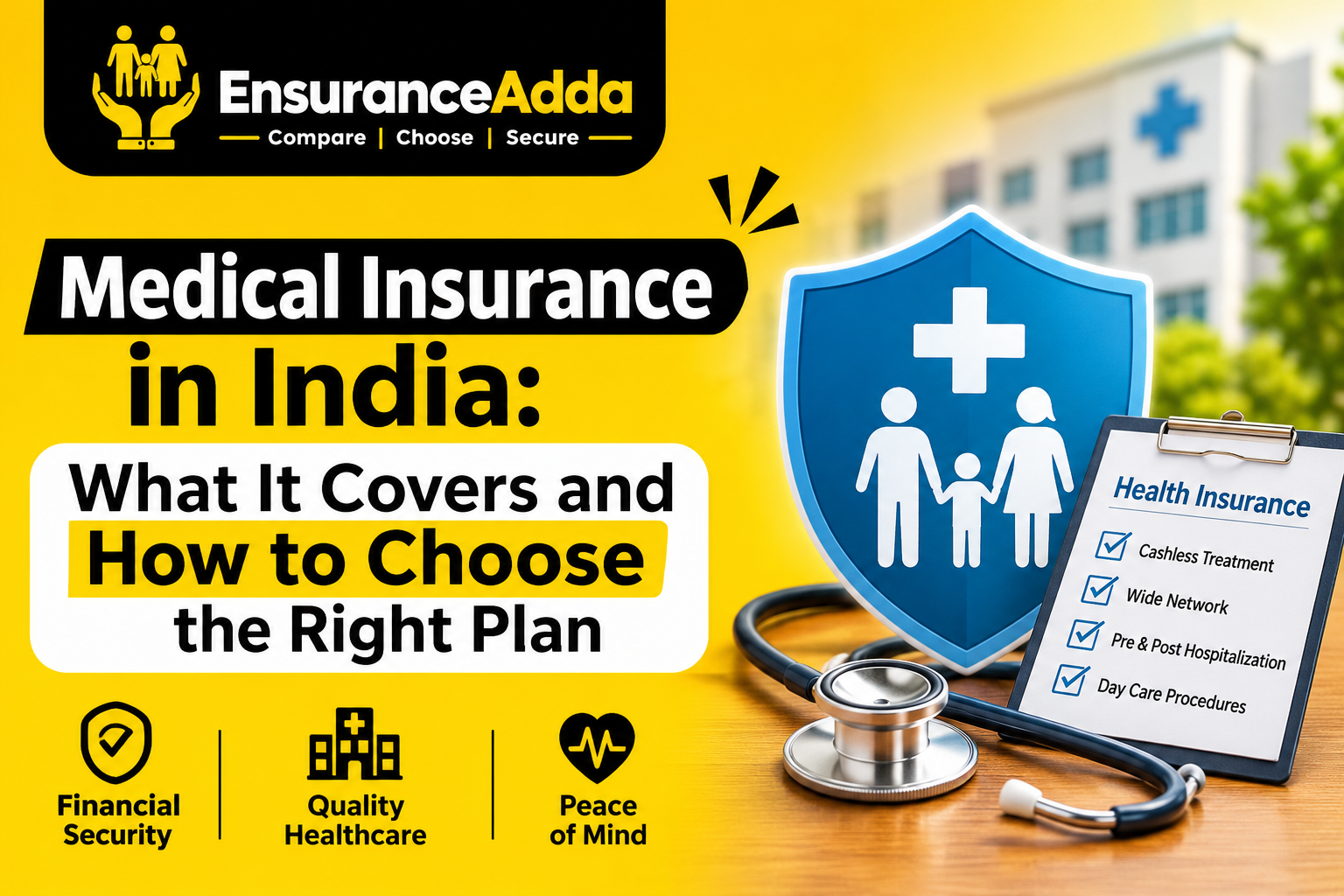
People often use “medical insurance”, “mediclaim” and “health insurance” interchangeably. Traditionally, mediclaim meant a basic plan that covered only hospitalisation. Modern health insurance plans are broader and may include day-care procedures, pre- and post-hospitalisation costs, ambulance charges and wellness benefits.
What Does Medical Insurance Cover?
Most standard plans include:
- In-patient hospitalisation: room rent, nursing, doctor fees, surgery and ICU charges.
- Pre-hospitalisation expenses: tests and consultations before admission, usually for a fixed number of days.
- Post-hospitalisation expenses: follow-up care and medicines after discharge, again for a fixed period.
- Day-care procedures: treatments such as cataract surgery or dialysis that no longer need a 24-hour stay.
- Ambulance charges: emergency transport, usually up to a limit.
- AYUSH treatment: Ayurveda, Yoga, Unani, Siddha and Homeopathy, in many plans.
Some plans also offer maternity cover, annual health check-ups, restore benefits and no-claim bonuses.
What Is Usually Not Covered?
Read the exclusions before you buy. Common ones are:
- Cosmetic or purely aesthetic procedures
- Injuries from self-harm or substance abuse
- Waiting-period conditions, such as pre-existing diseases in the early years
- Non-medical items such as certain consumables
- Experimental or unproven treatments
Exact terms vary by insurer, so check the policy wording.
Key Terms Every Buyer Should Know
Sum insured: the maximum amount the insurer will pay in a policy year. Choose this based on hospital costs in your city, not just the premium.
Premium: what you pay each year. It depends on age, city, sum insured and health history.
Waiting period: the time before certain conditions or treatments become eligible for claims.
Co-payment: the share of each claim that you pay yourself.
Room rent limit: a cap on the room category. Exceeding it can reduce your claim proportionately, so check it carefully.
Deductible: an amount you pay before the insurer starts paying.
Network hospitals: hospitals tied up with the insurer for cashless treatment.
Cashless vs Reimbursement Claims
With a cashless claim, you get treated at a network hospital, the hospital coordinates with the insurer, and you pay only non-covered items. With a reimbursement claim, you pay the bill yourself, submit documents and get repaid after approval. Cashless is more convenient, but reimbursement helps when you are treated at a non-network hospital.
Types of Medical Insurance Plans
- Individual plan: covers one person with a dedicated sum insured.
- Family floater: one sum insured shared by the whole family, often more economical.
- Senior citizen plan: designed for older adults, with features suited to age-related needs.
- Critical illness cover: pays a lump sum on diagnosis of specified serious illnesses.
- Top-up and super top-up: extra cover above a deductible at a lower premium.
- Group cover from an employer: useful, but limited, and it usually ends when you leave the job.
How to Choose the Right Medical Insurance Plan
1. Pick an adequate sum insured. Consider hospital costs in your city, your family size and medical inflation. A top-up can raise cover affordably.
2. Check the network. Make sure good hospitals near you are on the cashless list.
3. Compare waiting periods. Shorter waits for pre-existing conditions are valuable, especially if you already have health concerns.
4. Review sub-limits and room rent caps. These quietly shrink claims.
5. Look at the claim settlement record. Check the insurer’s claim settlement ratio and how quickly it processes claims.
6. Read the exclusions. The fine print matters more than the brochure.
7. Buy early. Premiums are lower when you are young and healthy, and waiting periods start counting from day one.
Tax Benefits
Premiums paid for medical insurance can qualify for a deduction under Section 80D of the Income Tax Act, subject to limits that depend on age and who is covered. Rules change, so confirm current limits with the official income tax website or a tax professional.
Common Mistakes to Avoid
- Choosing a policy only because the premium is low
- Hiding pre-existing conditions on the proposal form
- Relying only on employer cover
- Ignoring renewal terms and lifelong renewability
- Not reading the exclusions and sub-limits
Frequently Asked Questions
Is medical insurance the same as health insurance?
In everyday use, yes. Technically, medical insurance or mediclaim focuses on hospitalisation costs, while health insurance can be broader.
Can I buy medical insurance if I already have a health condition?
Often yes, but the condition may be subject to a waiting period or exclusion. Always disclose it honestly.
What is a good sum insured?
There is no single number. Base it on your city’s hospital costs, family size and existing cover.
Can I switch insurers?
Yes, through portability, which can carry forward credit for waiting periods you have already served. Check the insurer’s rules and timelines.
Does medical insurance cover COVID-19 or other infectious diseases?
Many plans cover hospitalisation for them, but check your policy wording.
Conclusion
Medical insurance is one of the most practical financial safeguards you can have. Focus on adequate cover, a strong hospital network, short waiting periods and clear terms rather than the cheapest premium. Compare plans, read the policy document carefully, and buy before you need it.