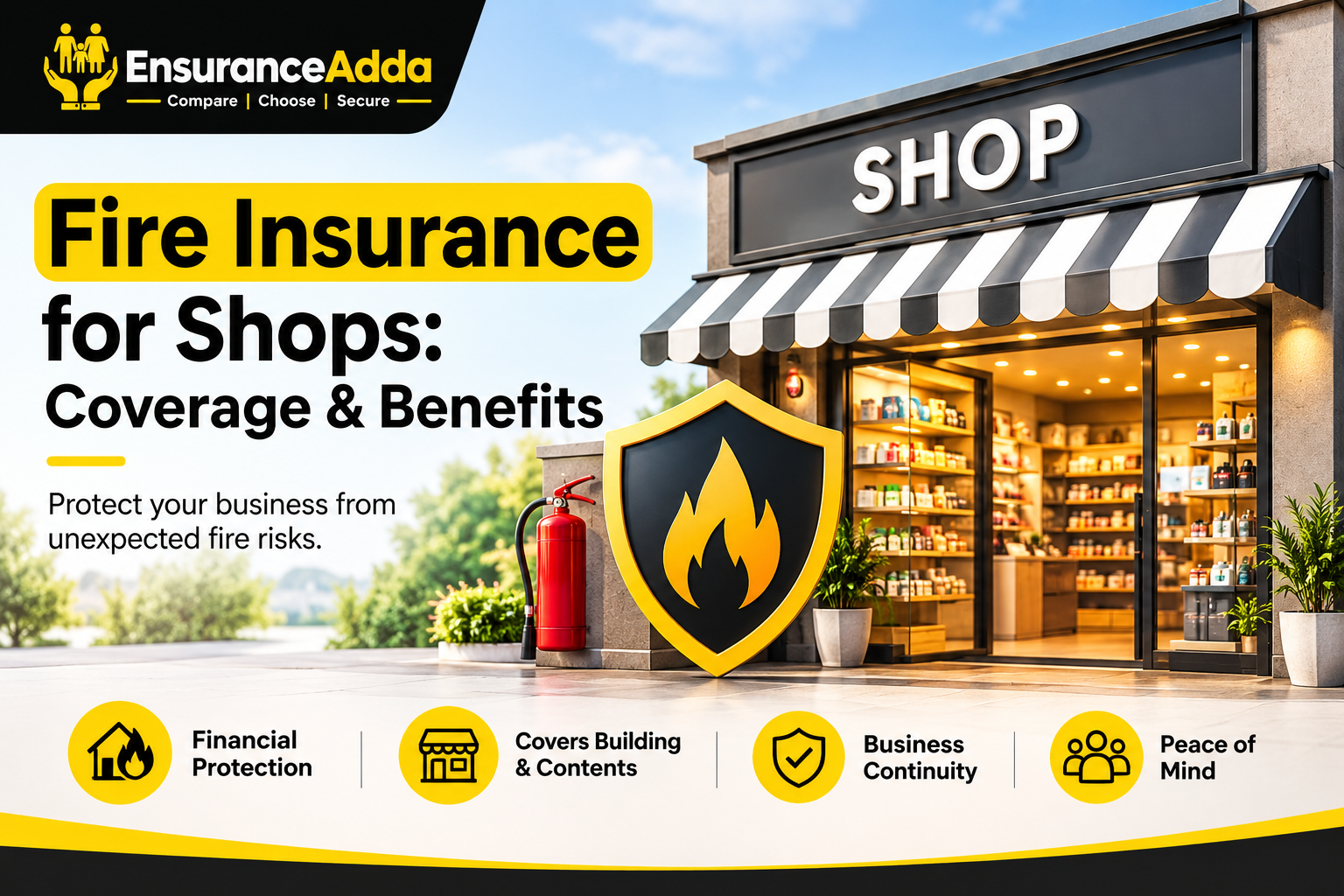
A fire can wipe out a shop in a few hours. The stock, the furniture, the signboard, the billing system and the shop itself can all be lost, and rebuilding takes months of effort and a lot of money. Fire insurance for shops protects you from that loss. This guide explains what it covers, what it doesn’t, the benefits, and how to choose the right policy.
What Is Fire Insurance for Shops?
Fire insurance for shops is a property insurance policy. It pays for loss or damage to your shop’s building, stock, and contents caused by fire and certain related risks. In India, most insurers sell it as the Standard Fire and Special Perils (SFSP) Policy, which covers more than fire alone.
You can buy it as a standalone policy, or as part of a bundled shopkeeper’s package that also covers theft, burglary, and liability.
What Does Fire Insurance for Shops Cover?
1. Fire and Lightning
This is the core cover. It pays for damage from accidental fire and lightning, including damage caused by firefighting efforts such as water and demolition.
2. Explosion and Implosion
Damage from explosion of boilers, gas cylinders, or similar equipment (excluding certain industrial explosions) is covered.
3. Special Perils
Standard policies add cover for:
- Storm, cyclone, typhoon, tempest, hurricane, tornado
- Flood, inundation
- Earthquake (fire and shock)
- Landslide, rockslide
- Riot, strike, malicious damage
- Impact damage from vehicles, aircraft, or falling trees
- Bursting or overflowing of water tanks and pipes
- Subsidence
4. What Property Can Be Insured?
- Building: structure, walls, roof, flooring (if you own the shop)
- Stock: goods, raw materials, finished products, packaging
- Furniture, fixtures and fittings: shelves, counters, racks, display units
- Machinery and equipment: refrigerators, ACs, billing machines, computers, CCTV
- Improvements and interiors: especially important if you rent the shop
5. Optional Add-ons
- Loss of profits (business interruption): compensates for lost income while the shop is closed for repairs
- Debris removal: clearing costs after a fire
- Architect and surveyor fees
- Terrorism cover
- Spontaneous combustion (for certain goods)
- Omission to insure additional property
What Is Not Covered?
Knowing the exclusions helps you avoid claim rejections. Typical exclusions are:
- Losses from war, nuclear risks, or radioactive contamination
- Deliberate acts or arson by the policyholder
- Fire from the spoilage or self-heating of goods (unless the add-on is taken)
- Loss of cash, jewellery, valuables, and documents (unless specifically covered)
- Consequential losses not mentioned in the policy
- Damage from wear and tear, faulty workmanship, or poor maintenance
- Electrical or mechanical breakdown without a fire
- Pre-existing damage
- Stock kept outside the declared premises
Always read the policy wording carefully and ask the insurer to explain anything unclear.
Key Benefits of Fire Insurance for Shops
- Financial protection: A claim pays for repairs or replacement, so one accident doesn’t wipe out your savings.
- Wide cover in one policy: Fire plus floods, storms, riots, and more under a single plan.
- Affordable premiums: Premiums are usually a small fraction of the sum insured, which makes the cost low compared with the risk.
- Faster recovery: With loss-of-profit cover, you can keep paying rent, salaries and EMIs while the shop is shut.
- Easier access to loans: Banks and NBFCs often require fire insurance on the property or stock before approving a business loan or overdraft.
- Peace of mind: You can focus on running your business without worrying about a worst-case scenario.
- Customisation: Choose the covers and add-ons that suit your trade, whether it is a grocery store, garment shop, electronics outlet or pharmacy.
Who Should Buy It?
- Owners of retail shops, kirana stores, and supermarkets
- Garment, footwear and textile traders
- Electronics and appliance dealers
- Restaurants, bakeries and sweet shops (high fire risk)
- Pharmacies and medical stores
- Stationery, paper and book shops (highly flammable stock)
- Tenants who have invested in interiors and fixtures
If your shop is in a market with narrow lanes, shared walls, or old wiring, the risk is higher and the cover matters even more.
How Is the Premium Calculated?
Several factors decide your premium:
- Sum insured: higher value means higher premium
- Type of business and stock: flammable goods like chemicals, paper, and plastics cost more to insure
- Construction type: buildings with RCC construction are cheaper to insure than those with wooden or thatched roofs
- Location: proximity to fire stations, hydrants and crowded areas matters
- Fire safety measures: extinguishers, smoke detectors, sprinklers and alarms can lower the premium
- Add-ons chosen
- Claim history
How to Choose the Right Fire Insurance Policy
- Insure at the right value. Underinsurance is the most common mistake. If you insure for less than the actual value, the insurer may reduce your claim under the average clause.
- Compare covers, not just prices. A cheaper policy with fewer perils may cost you more at claim time.
- Check the add-ons. Loss of profits and debris removal are often worth the extra cost.
- Review exclusions and sub-limits.
- Check the insurer’s claim settlement record and network of surveyors.
- Declare everything honestly. Hiding stock details or risk factors can lead to rejection.
- Update the policy whenever stock levels or premises change.
How to File a Fire Insurance Claim
- Inform the fire brigade and the police immediately, and get a copy of the fire report or FIR.
- Notify your insurer right away. Delayed intimation can cause problems.
- Take steps to minimise the loss, such as saving what you safely can.
- Do not dispose of damaged goods until the surveyor has inspected them.
- Document everything: photographs, videos, stock registers, purchase bills, and sales records.
- Submit the claim form along with the required documents.
- Cooperate with the surveyor, who will assess the loss and submit a report to the insurer.
- Receive the settlement after the claim is approved.
Tips to Reduce Fire Risk in Your Shop
- Get the electrical wiring checked regularly and avoid overloaded sockets
- Keep fire extinguishers in working condition and train staff to use them
- Store flammable material away from heat sources
- Install smoke detectors and alarms
- Keep exits clear and unblocked
- Maintain accurate stock records, since they speed up claims
- Never leave heaters, stoves, or equipment unattended
These steps protect your shop and can also help you get better premium rates.
Frequently Asked Questions
Is fire insurance mandatory for shops?
It’s not legally required for all shops, but lenders usually insist on it, and it is strongly advisable for every business.
Does fire insurance cover stock?
Yes, if you declare the stock and include it in the sum insured.
Can tenants buy fire insurance?
Yes. Tenants can insure stock, furniture, fittings and interiors, even though they don’t own the building.
Does it cover losses from riots or floods?
Standard SFSP policies include these special perils.
Will I get compensated for lost income?
Only if you’ve taken the loss-of-profits (business interruption) add-on.
How long does claim settlement take?
It depends on the loss, documentation, and surveyor’s report, but complete and accurate paperwork speeds it up.
Conclusion
Fire insurance for shops is one of the most cost-effective ways to protect your business. A policy that covers fire, special perils, and the right add-ons helps you recover quickly instead of starting from zero. Insure for the correct value, understand the exclusions, keep your records in order, and invest in basic fire safety. A small premium today can save your business tomorrow.