
Buying or renewing car insurance involves more than just choosing the right policy. The final premium can include the insurance price, applicable taxes, and any additional charges. Understanding GST on car insurance helps you read your premium quotation correctly and know what you are paying for.
Goods and Services Tax (GST) is an indirect tax that may apply to insurance services under the prevailing tax rules. When you purchase a car insurance policy online or through an insurance agent, the premium breakdown generally shows the base premium and applicable taxes separately.
In this guide, you will learn how GST affects your car insurance premium, how to calculate the final amount, whether GST applies to different types of car insurance, and what to check before buying or renewing a policy.
What Is GST on Car Insurance?
GST on car insurance refers to the Goods and Services Tax applicable to the insurance service under the current tax rules. Insurance companies collect the applicable tax as part of the premium payment and account for it according to GST regulations.
When you receive a car insurance quotation, the amount shown before tax may differ from the final amount you need to pay. The final payable premium depends on the insurer’s pricing, your selected coverage, add-ons, discounts, and applicable taxes.
For example, a policy quotation may show:
- Base insurance premium
- Optional add-on charges
- Applicable GST or other statutory tax components, as shown by the insurer
- Final payable premium
Always check the detailed quotation rather than assuming that the first premium amount displayed is the final amount.
How Does GST Affect Your Car Insurance Premium?
GST can increase the amount payable over the taxable insurance premium. The final cost depends on the applicable tax treatment and the amount on which the tax is calculated.
For example, suppose the taxable premium shown in your quotation is ₹10,000. If the applicable GST rate were 18%, the calculation would be:
- Taxable premium: ₹10,000
- Illustrative GST at 18%: ₹1,800
- Total amount: ₹11,800
This is only a mathematical example, not confirmation of the current GST rate for car insurance. Check the latest applicable rules and your insurer’s quotation before using a rate in a purchase decision.
The actual amount can be different because your policy may include add-ons, discounts, adjustments, or other items treated according to the applicable rules.
How to Calculate GST on Car Insurance
You can estimate the final premium by identifying the taxable amount and applying the relevant GST rate.
Formula:
GST amount = Taxable premium × Applicable GST rate ÷ 100
Final premium = Taxable premium + GST amount
Example of car insurance GST calculation
Suppose your taxable premium is ₹12,000 and the applicable rate used for illustration is 18%.
- Taxable premium: ₹12,000
- Illustrative GST: ₹12,000 × 18 ÷ 100 = ₹2,160
- Illustrative total: ₹12,000 + ₹2,160 = ₹14,160
This example explains the calculation method only. Use the rate confirmed by current official rules and the insurer’s invoice for a real policy.
Does GST Apply to All Types of Car Insurance?
Tax treatment should be checked against the current rules and the policy quotation. The main types of car insurance in India include the following.
1. Third-Party Car Insurance
Third-party car insurance covers specified legal liabilities arising from injury, death, or property damage to third parties, subject to policy terms and applicable law. It is the minimum motor insurance cover generally required for a car used on public roads in India.
The premium and applicable tax treatment should be checked in the insurer’s final quotation. Do not assume that tax is included in an advertised price unless the quotation confirms it.
2. Comprehensive Car Insurance
Comprehensive car insurance combines third-party liability cover with cover for damage to your own car, subject to exclusions and policy conditions.
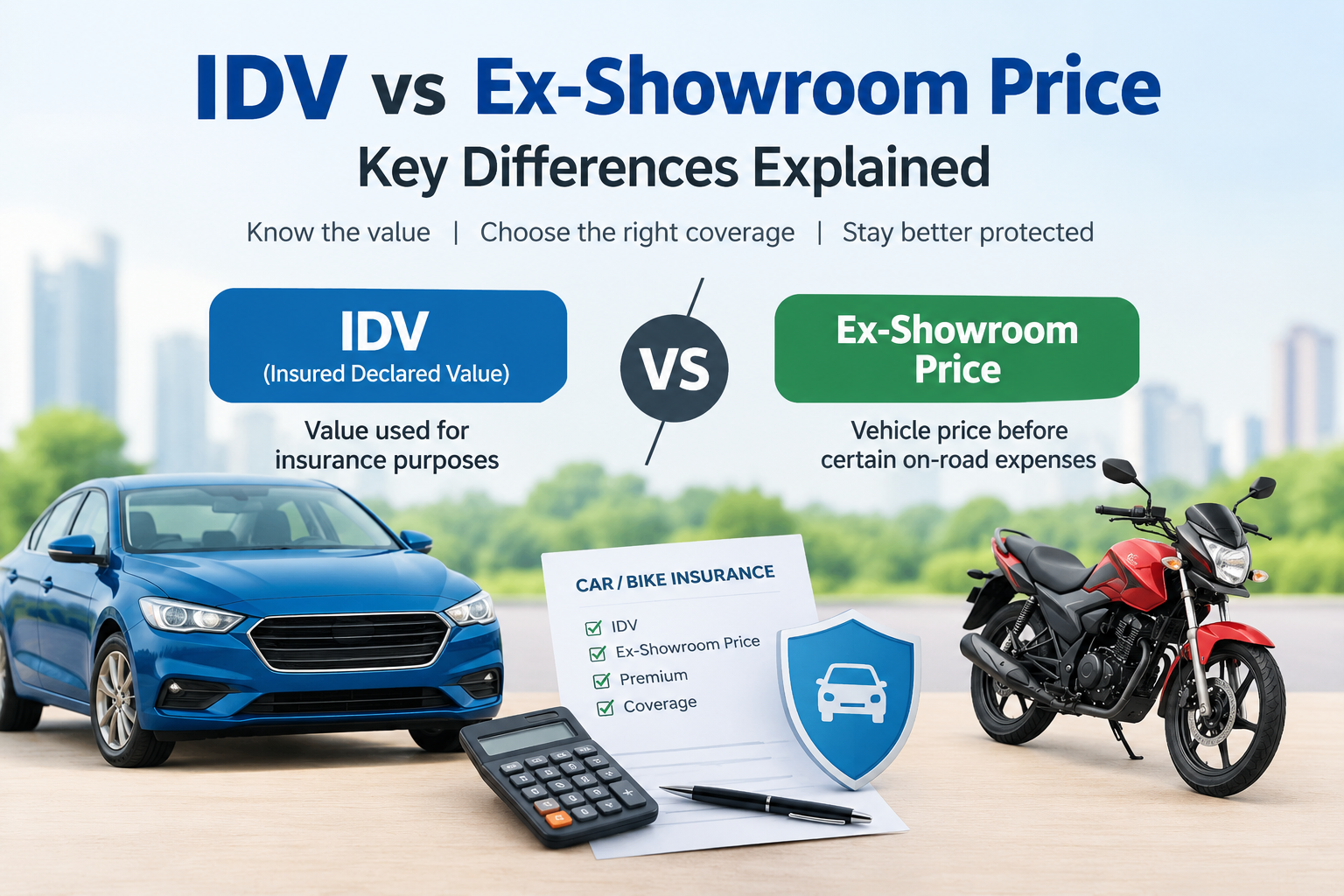
Its price may depend on factors such as the car’s insured declared value (IDV), location, vehicle details, selected voluntary deductible, and add-ons. Applicable taxes can affect the final amount you pay.
3. Standalone Own-Damage Insurance
Standalone own-damage insurance covers specified damage to your own vehicle and is commonly paired with separate third-party cover where required.
Check the premium breakdown for the own-damage policy and confirm the applicable tax treatment with the insurer. The final payable amount should be based on the policy documents and current rules.
GST on Car Insurance Renewal
When you renew your car insurance, the final premium may change even if you stay with the same insurer. Several factors can influence the renewal amount:
- Changes in the insurer’s base premium
- Changes to your car’s insured declared value
- Your claim history and any eligible no-claim bonus
- Add-ons selected at renewal
- Changes in applicable taxes or regulatory rules
- Changes to the policy’s coverage or deductible
Before paying, compare the renewal quotation with your previous policy. Check the base premium, discounts, add-ons, applicable tax, and final amount separately.
If the total seems higher than expected, ask the insurer for a detailed premium breakdown rather than assuming the increase is entirely due to GST.
Does GST Affect Car Insurance Claims?
GST on the insurance premium and GST involved in vehicle repairs are different issues.
When you file a car insurance claim, the insurer assesses the loss according to the policy wording, coverage limits, deductibles, exclusions, and claim conditions. The settlement amount may also depend on the repair invoice and the applicable claim rules.
Do not assume that the tax paid when buying insurance will automatically be refunded during a claim. Likewise, do not assume that every tax component on a repair bill will necessarily be reimbursed. Check the policy wording and obtain clarification from the insurer or authorised workshop when needed.
Can You Save Money on GST on Car Insurance?
You generally cannot choose an arbitrary GST rate or avoid a legally applicable tax simply by selecting another insurer. However, you can compare policies and manage the premium before tax.
Consider these practical steps:
- Compare similar policies: Review coverage, deductibles, exclusions, and add-ons, not just the final price.
- Choose suitable add-ons: Select add-ons that fit your car’s age, usage, and financial needs.
- Check your no-claim bonus: If eligible, make sure the applicable discount is reflected in your renewal quotation.
- Provide accurate vehicle details: Incorrect information can lead to quotation changes or complications later.
- Review the final invoice: Confirm the premium, discounts, applicable taxes, and payable total.
- Renew on time: Avoid allowing your policy to lapse, and check the insurer’s process if your existing policy has expired.
The best way to manage costs is to select suitable cover at a competitive price and verify the final premium breakdown.
What Should You Check Before Buying Car Insurance Online?
Before making a payment, review the following details:
- Coverage type: Confirm whether you are buying third-party, comprehensive, or standalone own-damage insurance.
- Insured Declared Value: Check the IDV and understand how it affects your own-damage cover.
- Add-ons: Confirm which optional covers are included and how much they cost.
- Discounts: Check whether eligible discounts, including a no-claim bonus, have been applied.
- Taxes and charges: Review the tax breakdown and confirm that the final payable amount matches the quotation.
- Policy wording: Read the exclusions, deductibles, claim conditions, and coverage limits.
- Insurer details: Verify the insurer and policy information before completing the purchase.
Keep a copy of the final quotation, payment receipt, and policy document for your records.
Frequently Asked Questions About GST on Car Insurance
1. What is GST on car insurance?
GST on car insurance is the tax applicable to the insurance service under prevailing GST rules. The insurer’s quotation or invoice should show the applicable tax details.
2. How do I calculate GST on my car insurance premium?
Identify the taxable premium, multiply it by the applicable GST rate, and divide by 100. Add the resulting tax amount to the taxable premium to estimate the total, subject to the insurer’s actual invoice and applicable rules.
3. Is GST included in the car insurance premium shown online?
It depends on how the insurer displays its quotation. Check whether the displayed amount is before tax or inclusive of applicable taxes before paying.
4. Does GST apply when I renew car insurance?
The tax treatment for a renewal should be confirmed under the rules in force at the time of renewal. Review the renewal quotation and final invoice for the applicable tax details.
5. Can I avoid GST by buying car insurance directly online?
Buying directly online does not by itself remove a legally applicable tax. You can compare insurers and policy features to find suitable value, but you should not assume that changing the purchase channel eliminates GST.
6. Does GST on car insurance affect my claim amount?
The tax paid on the insurance premium is separate from the way a claim is assessed. Claim payments depend on policy terms, covered losses, deductibles, exclusions, and applicable claim rules.
7. Where can I verify the current GST rate?
Check current official GST notifications and guidance from the Government of India, and confirm the treatment shown in your insurer’s quotation or invoice. Do not rely solely on old articles or outdated premium examples.
Conclusion
Understanding GST on car insurance helps you make sense of the difference between the quoted premium and the final amount payable. Before buying or renewing a policy, check the base premium, coverage, add-ons, discounts, applicable taxes, and final invoice.
Rather than choosing a policy only because it appears cheaper, compare the coverage and conditions carefully. For the most accurate tax information, rely on current official rules and your insurer’s detailed quotation.